Turner Network Television's Made-for-TV Western Films: Engaging Audiences Through Genre and Themes
Files
Access Full Text or Media
Document Type
Book Chapter
Description
Book Title:
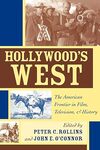
Hollywood's West: The American Frontier in Film, Television, and History
Book Chapter Description:
Randy Smith, a member of the Western Writers of America,1 states that "some of the best recent Westerns have been totally the provenance of the cable television industry." He asserts that while the major motion picture studios are stymied by marketing conservatism, cable networks, like Turner Network Television (TNT), have been producing Westerns that are truly representative of the "best qualities of the genre. "Ted Mahar echoes Smith's claim by declaring that the network's Monte Walsh (2003) "is one of the best westerns of the last quarter-century" ("Monte Walsh" 1). These comments about the quality of TNT's Western films raise several critical questions: Why did the network begin producing Western films? How does the network attract viewers for Western films? And how do these movies engage contemporary audiences? Genre elements and conventions, like horses, cowboy heroes, or quickdraw gunfights, serve to attract audiences to Westerns. They also define what is and, more important, what is not a Western. Just as the Hollywood film industry relies on various genre markers to identify and appeal to its diverse audiences, so do TNT productions. The cable network also taps into a wide range of existing social themes and then reworks, restructures, and reshapes them into programming that engages their particular viewerships (Gronbeck 229-30). By analyzing the dominant themes in TV movies, one will be able to begin to understand why they are so popular and meaningful to a wide range of viewers. To address the previous questions, this chapter is organized as follows: first, it will examine TNT's institutional and economic rationale for producing Westerns; second, it will analyze how the network relies on generic markers to attract viewers for Western films; and, third, it will analyze four of the network's most popular Western movies-The Good Old Boys (1995), Last Stand at Saber River (1997), The Virginian (2000), and Crosifire Trail (2001)-to identify the presence of specific themes.
ISBN
9780813123547
Publication Date
2005
Publisher
The University Press of Kentucky
City
Lexington, Kentucky
Disciplines
Broadcast and Video Studies | Critical and Cultural Studies | Film and Media Studies | Film Production | Television
Recommended Citation
Pierson, David P., "Turner Network Television's Made-for-TV Western Films: Engaging Audiences Through Genre and Themes" (2005). Faculty, Staff, and Alumni Books. 722.
https://digitalcommons.usm.maine.edu/facbooks/722